


The stories you tell about your own life help you determine who you are and what you believe about yourself. Telling yourself, ‘I was a little terror’ instead of ‘I was a child acting out because the adults in my life were unable to be present’ can emotionally handicap your current relationships. Your beliefs dictate what you think. What you think dictates how you feel. How you feel compels you into specific (parenting) action.”1
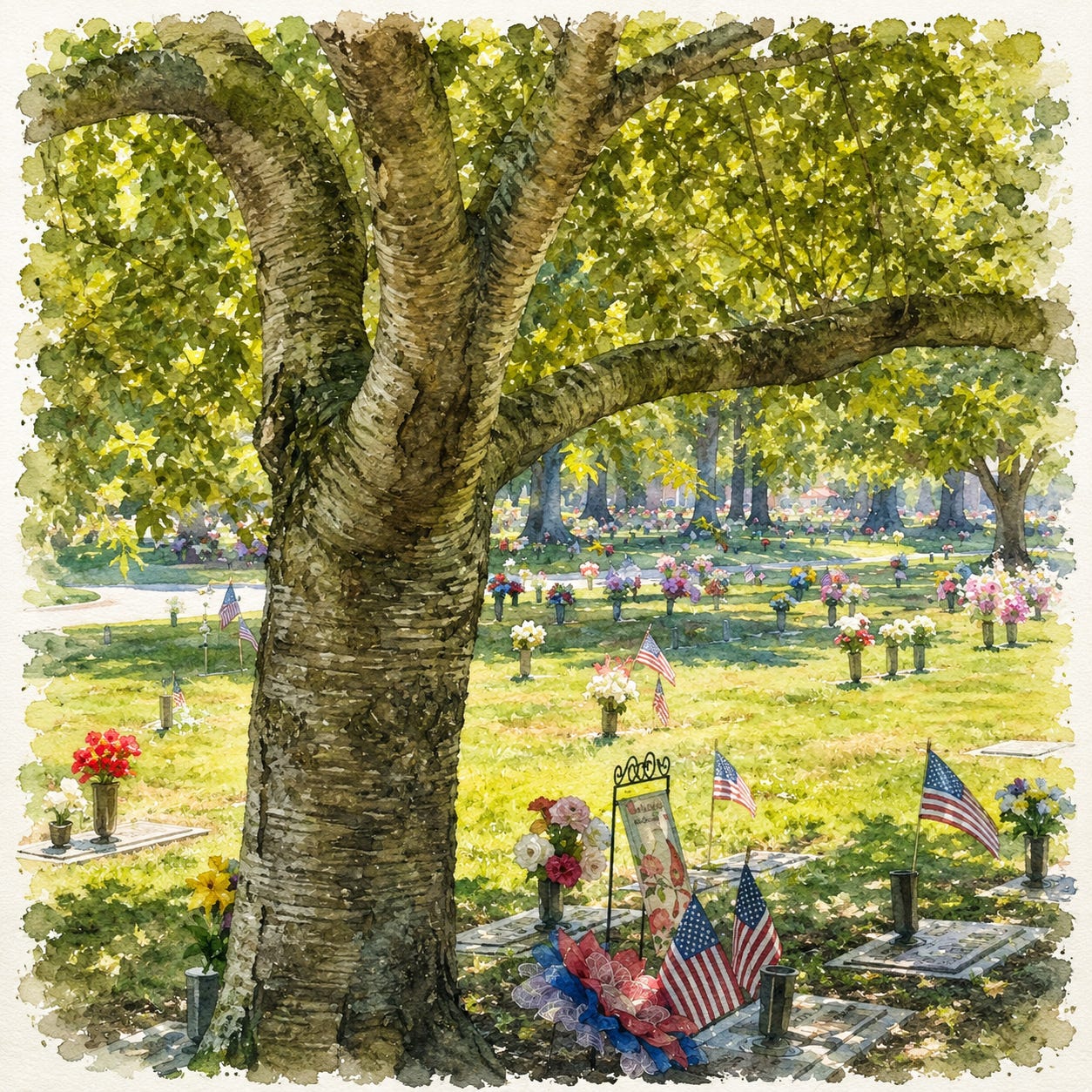
This past week, while taking a private knitting class at Mother of Yarns, I felt an unexpected pull to visit my parents’ gravesites nearby—I’ve only visited once in the years since they’ve passed.
Their graves rest beneath a sprawling tree whose branches seem to hold both shade and memory. The wind moved softly through the leaves that morning. I closed my eyes and embodied every whisp. Windchimes rang from the tree behind me, their notes drifting through the air as if carrying gentle messages of peace and rest.
I came carrying prayer burdens.
The past ten months have stretched my heart in ways I never anticipated. I’ve been wrestling with questions about next steps, future plans, and what faithfulness looks like in a season of uncertainty. More than answers, I’ve been seeking discernment and clarity.
So I sat quietly beneath that tree. It was so peaceful.
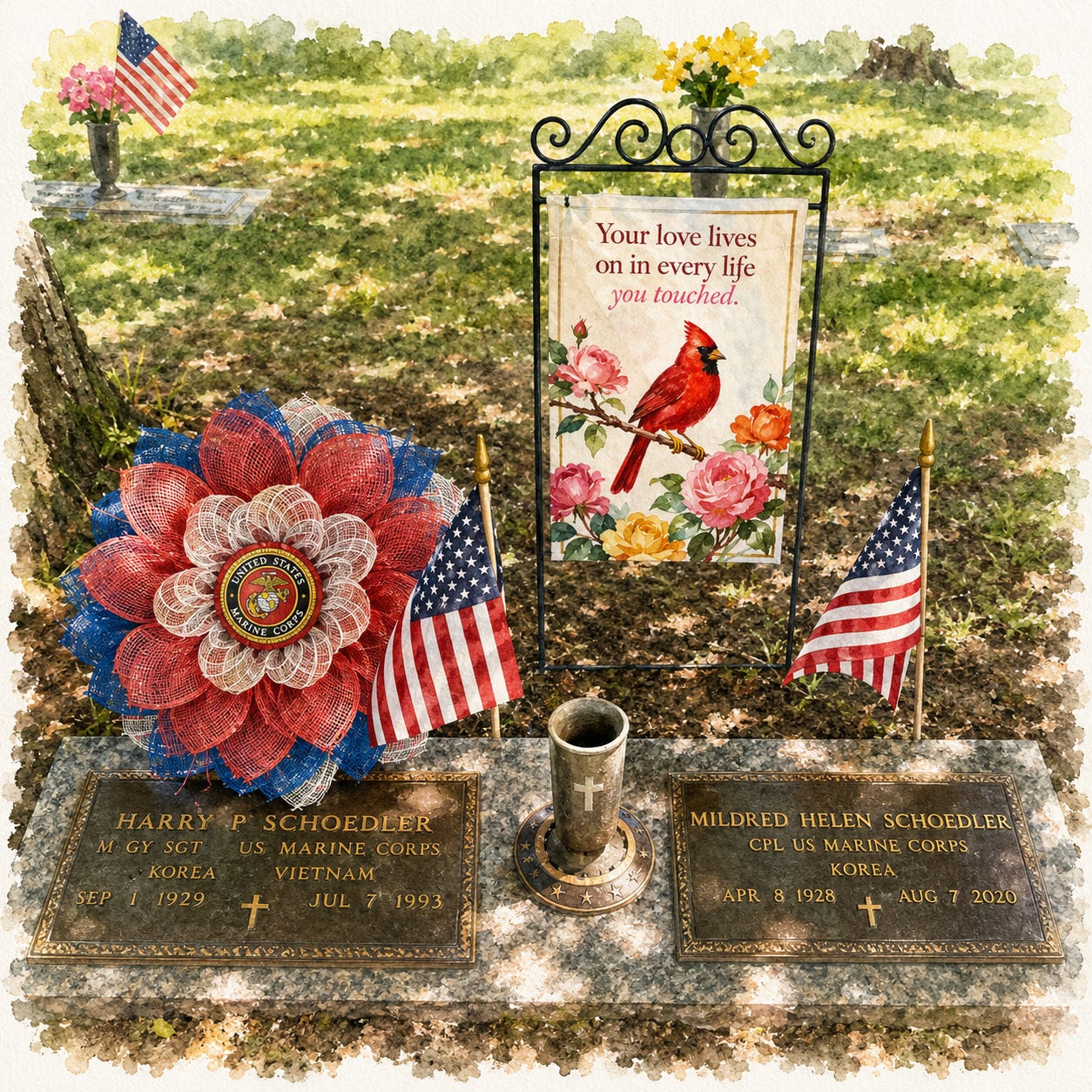
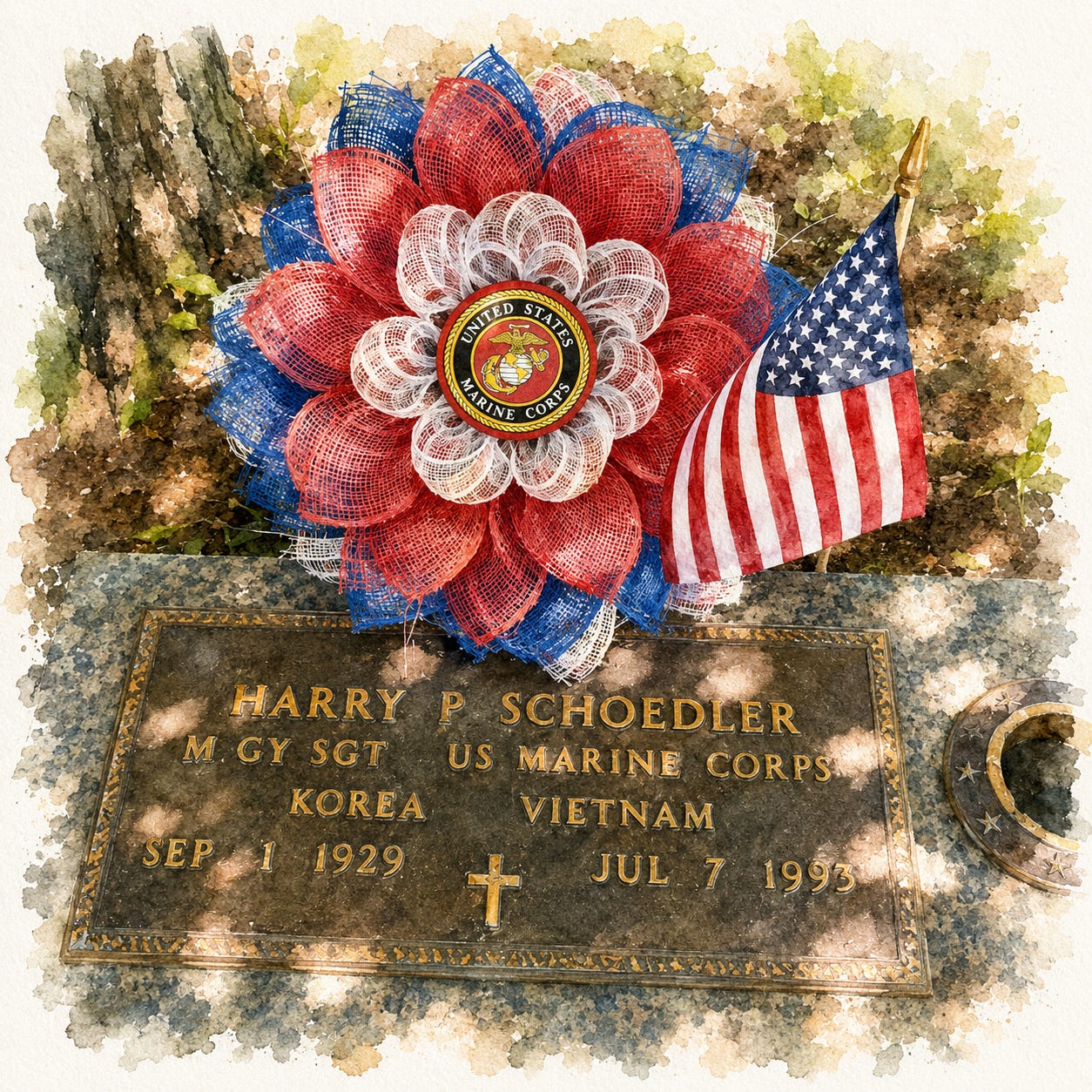
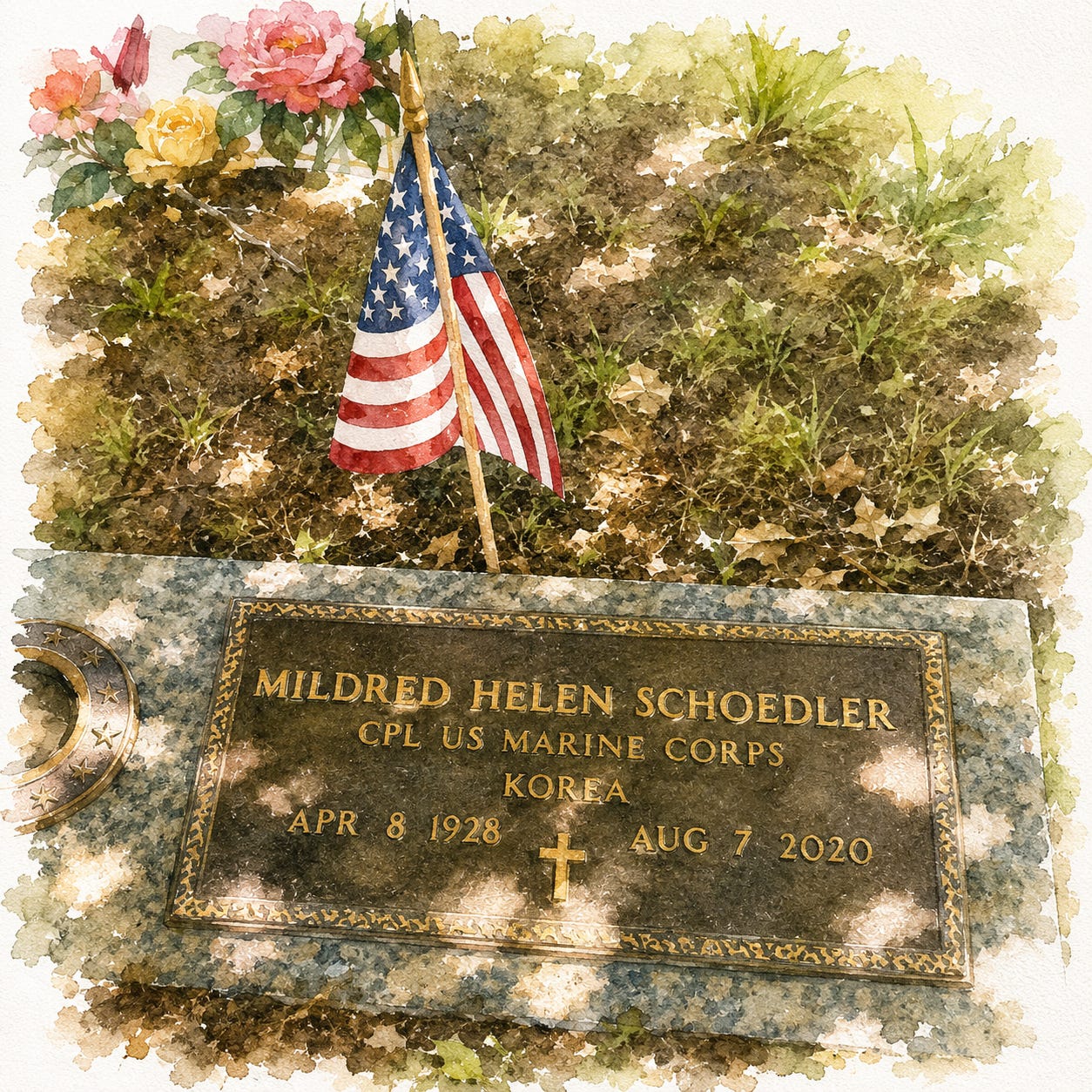
As I looked at the bronze markers bearing my parents’ names, I found myself thanking them. Thanking them for their brave leadership. For their sacrifices. For their military service. For the ways they showed up for their family, often carrying burdens of their own that I didn’t fully understand until adulthood—some I may never understand. And that is okay.
And then I thought about a quote from my conversation with Mary Van Geffen:
“The quality of the fruit of your parenting is dependent on the story you choose to tell yourself about your own childhood.”
Standing there, I found myself adding another word:
Grandparenting.
The quality of the fruit of your parenting—and grandparenting—is dependent on the story you choose to tell yourself about your own childhood.
I’ve been thinking about that ever since.
Because when we stand at the gravesites of those who raised us, we’re confronted with a choice. We can focus on what was missing, or we can honor what was given. We can rehearse wounds, or we can recognize gifts. Most often, if we’re honest, our stories contain both.
The Story We Tell Ourselves
But the story we choose to tell matters. It shapes the legacy we continue.
It influences the way we love our children and grandchildren.
It determines whether we inherit courage or resentment, gratitude or regret.
Kneeling beside my parents’ graves, I realized I wasn’t simply remembering the past. I was discerning the future.
I placed my left hand on my father’s headstone and my right hand on my mother’s.
Beneath the shade of that sprawling tree, I stood between the two people who shaped my earliest understanding of life, love, faith, family, courage, disappointment, perseverance, and hope.
And in that quiet moment, I realized what I wanted most.
To carry the good and release the bad.
To receive the gifts without perpetuating the wounds.
To honor their legacy without being bound by every part of it.
To become a faithful steward of what was beautiful and a gracious release point for what was not.
I was asking myself what parts of their legacy I want to carry forward.
Their courage.
Their resilience.
Their willingness to serve something larger than themselves.
Their commitment to family.
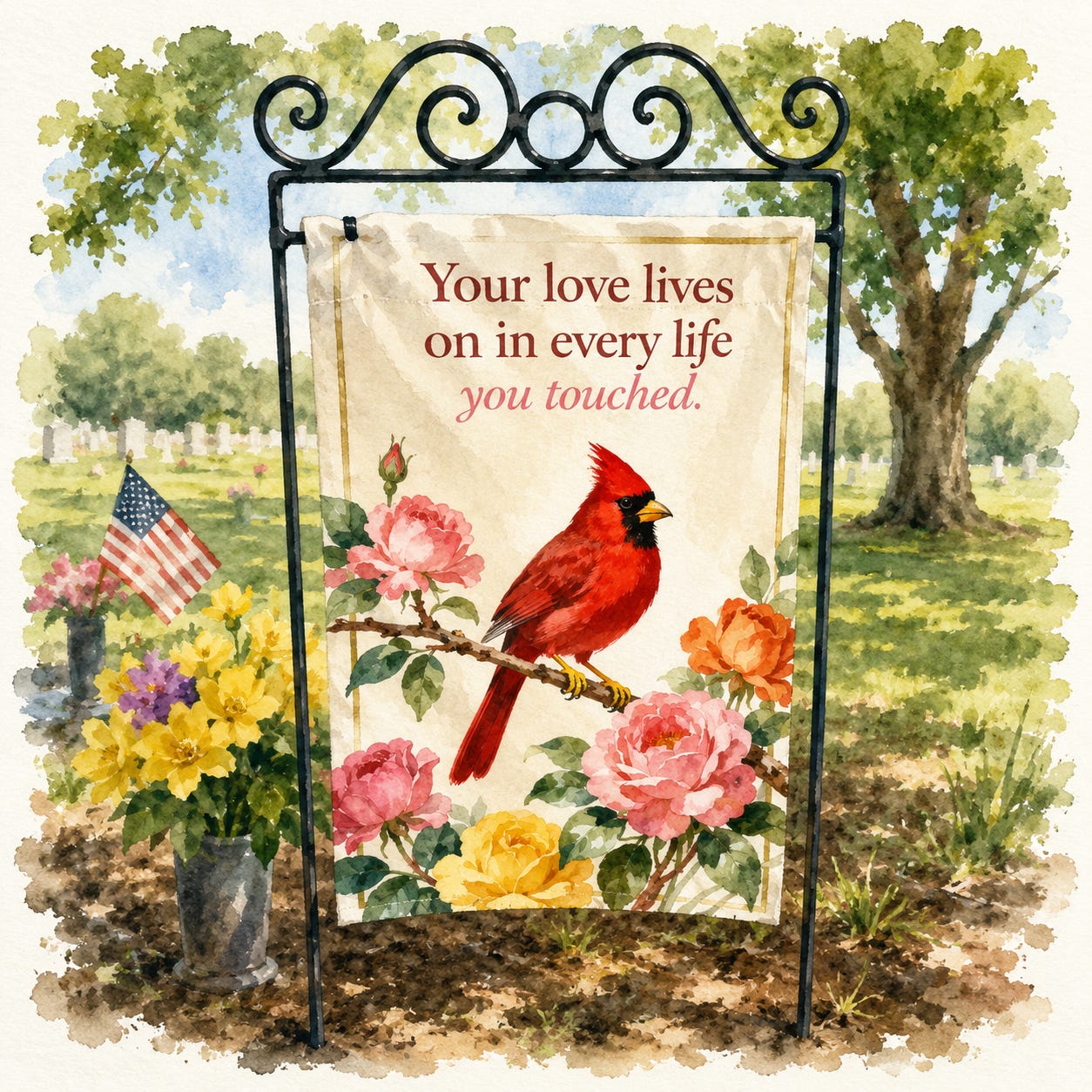
The garden flag I chose to place over them reads, “Your love lives on in every life you touched.”
I couldn’t stop thinking about those words and the resonance of Mary Van Geffen’s words earlier that week on the podcast, “Each generation refining the art of love.”
Because perhaps that is the truest measure of a life.
Not accomplishments. Not titles. Not even longevity.
But love.
Refining the Art of Love
Connection requires your full presence, your unconditional, positive regard, and your curious attention. Your phone is put away. If you have a negative reaction to the idea of ‘connect before you direct’ or feel like ‘I don’t have time for that,’ you need to make time for that. You need to rearrange your life and wrestle your priorities to the ground because your unhurried presence is the marrow of conscious parenting. The lifeblood.”2
Love that continues to ripple through generations. Love that shapes the stories we tell.
Love that gives us the courage to take the next faithful step when the path ahead isn’t entirely clear.
Sometimes discernment doesn’t arrive in a strategic plan.
Sometimes it comes as a whisper beneath a tree.
A soft wind.
The sound of distant windchimes.
A moment of gratitude.
And the quiet realization that the people who came before us may still be teaching us how to move forward.
The Passing of Treasures and Burdens
Because every family passes down both treasures and burdens.
Every generation hands the next generation examples worth following and patterns worth breaking.
The work of maturity is learning the difference.
This week, I read a profound truth: “We can honor our parents’ courage while also recognizing that courage doesn’t erase human frailty.”
We never really know the depths of our parents’ stories.
The story we tell ourselves is not a story of denial. It’s a story of discernment.
Not pretending the difficult parts never existed.
Not allowing the difficult parts to become the entire story.
I placed my hands on their headstones to humbly ask two questions:
What deserves to continue?
What ends with me?
What is Mine to Carry?
The foundational question, “What is mine to carry?” flooded my heart. It is the guiding light of The Heartlifter Way and our newfound Theology of Gentleness.
Discernment about the future often requires reconciliation with the past.
Not a perfect reconciliation. Not a complete understanding.
Just enough peace to move forward, carrying what is life-giving.
Standing there, one hand on my father’s stone and one hand on my mother’s, I realized that legacy is not simply what we receive.
Legacy is what we choose to carry forward.
And perhaps wisdom is learning to hold gratitude and grace in the same hands—to bless what was good, release what was not, and trust God with the generations still to come.
The sacred work of becoming an ancestor who passes on more blessings than burdens.
Mary Van Geffen, https://www.maryvangeffen.com/
Mary Van Geffen, https://www.maryvangeffen.com/